 Free UK shipping
 Results in under 14 days
 UK lab
10% Off All Tests - April 2026




Introduction to Haloperidol
Haloperidol is a first-generation, or “typical”, antipsychotic. Medicines in this group work by strongly blocking dopamine D2 receptors in the brain (52). This mechanism is very effective at reducing so-called positive symptoms of psychosis, such as hallucinations, delusions, and severe psychomotor agitation. For this reason, haloperidol has long been used in schizophrenia, acute mania, delirium, and other states of extreme agitation (16).
Alongside its dopamine effects, haloperidol also interacts with other receptor systems. These additional actions help explain both its clinical usefulness and its side-effect profile, particularly its impact on movement and the heart (53).
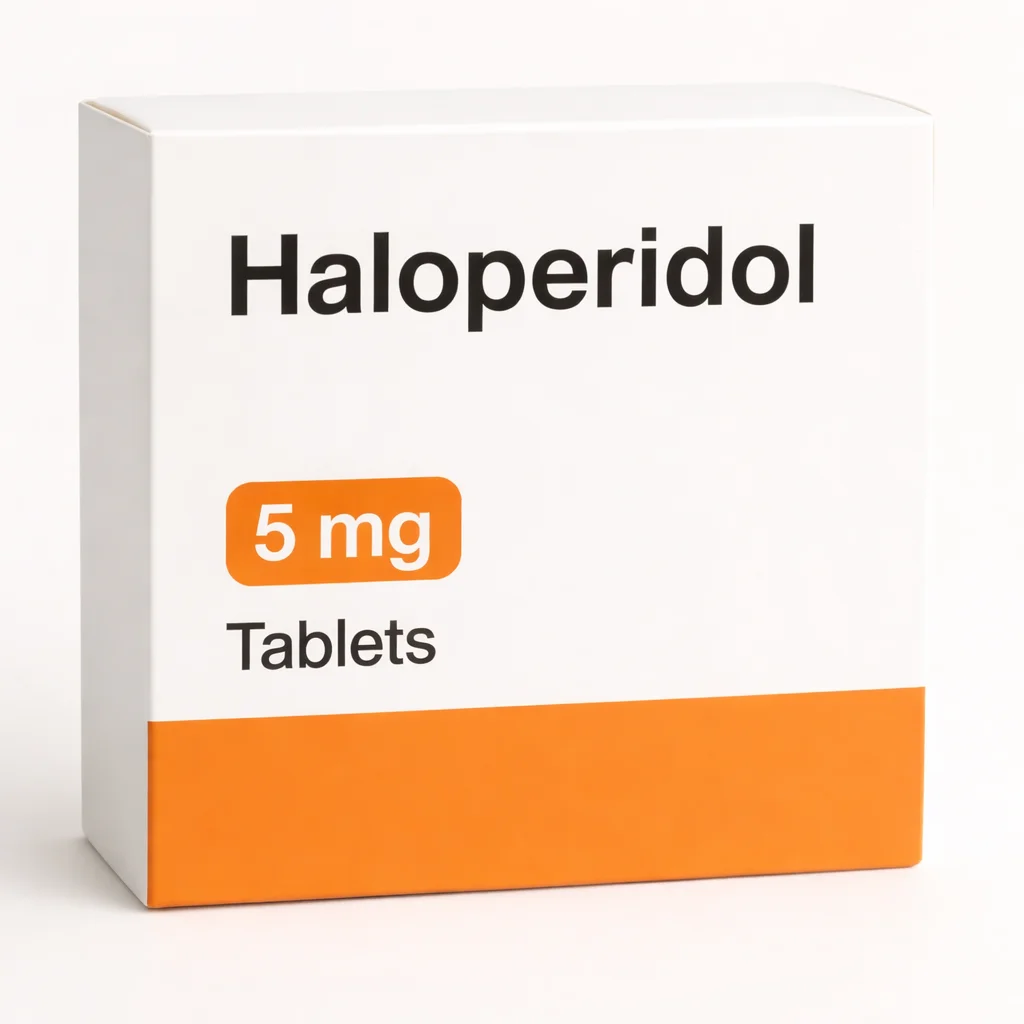
Considerations for Patients Taking Haloperidol
Haloperidol’s benefits and risks are closely linked. Its strong dopamine blockade makes it effective, but also increases the likelihood of movement-related side effects compared with newer antipsychotics (52, 53).
Parkinson’s-like Side Effects
Haloperidol has a high potential to cause extrapyramidal side effects, affecting up to around 30 percent of patients. These effects arise from dopamine blockade in movement-related brain regions and can include (52, 53):
-
Acute dystonia, with painful muscle spasms or abnormal eye movements, often appearing within hours or days of starting treatment
-
Akathisia, a distressing sense of inner restlessness that can develop over days to months
-
Parkinsonism, including stiffness, slowed movement, and tremor
-
Tardive dyskinesia, involving involuntary movements of the face, mouth, or jaw, usually with longer-term use
These symptoms should always be reported, as dose adjustment or additional treatment may be needed.
Metabolic Side Effects
Compared with second-generation antipsychotics such as olanzapine, quetiapine, or clozapine, haloperidol is less likely to cause significant weight gain or metabolic syndrome (52, 53). However, it can still affect glucose tolerance, lipid levels, and body weight, particularly with longer-term use.
Other Important Side Effects
Haloperidol’s actions on non-dopamine receptors can lead to additional effects, including (53):
-
Anticholinergic effects, such as dry mouth, constipation, urinary retention, drowsiness, and sedation
-
Orthostatic hypotension, where blood pressure drops on standing, increasing the risk of dizziness and falls
-
Cardiac effects, particularly prolongation of the QT interval, which is more likely with haloperidol than with many newer antipsychotics
Why Have I Been Prescribed Haloperidol?

Haloperidol has a wide range of clinical uses
Haloperidol is favoured particularly where symptoms are severe, distressing, or need to be controlled quickly (16). In the UK, it may be prescribed for:
-
Schizophrenia and schizoaffective disorders
-
Acute delirium when non-drug measures are ineffective
-
Moderate to severe manic episodes in bipolar I disorder
-
Acute psychomotor agitation associated with psychosis or mania
-
Persistent aggression and psychotic symptoms in moderate to severe Alzheimer’s or vascular dementia, when there is a risk of harm
-
Severe tic disorders, including Tourette’s syndrome, when other treatments have failed
-
Chorea in Huntington’s disease
-
Nausea, vomiting, agitation, or delirium in palliative care
Clinicians often choose haloperidol because its effects are predictable and fast-acting. It is commonly used short term, particularly in hospital settings, to stabilise symptoms before longer-term treatment plans are reviewed.
Haloperidol Doses

How and when to take it
Haloperidol dosing varies depending on the condition being treated, the route of administration, and individual sensitivity to side effects. Treatment usually starts at a low dose and is adjusted gradually based on response and tolerability. Lower doses may be sufficient for delirium or nausea, while higher doses are sometimes required for acute psychosis or severe agitation. The aim is always to use the lowest dose that achieves symptom control, as the risk of movement-related and cardiac side effects increases with dose (16, 52, 53).
How and When to Take Haloperidol
Haloperidol can be taken by mouth, given by intramuscular injection for rapid symptom control, or administered as a long-acting depot injection in selected patients. Oral doses are usually taken once or twice daily and may be taken with or without food. Injectable forms are typically reserved for acute situations or when oral medication is not possible.
Because haloperidol can cause sedation, stiffness, and heart rhythm changes, it is important not to change the dose or timing without medical advice. Regular review is particularly important early in treatment and after any dose changes or medication interactions.
Haloperidol Side Effects
Haloperidol’s side effects are closely linked to how much of the drug is present in the bloodstream. While some effects are related to dopamine blockade itself, others arise when haloperidol levels become too high or too low due to interactions with other medicines. Because haloperidol has a relatively narrow margin between effective and problematic doses, changes in drug levels can quickly translate into movement symptoms, sedation, or effects on heart rhythm. This is why medicine interactions are a particularly important part of haloperidol safety.
Interactions of Haloperidol With Other Medications
Haloperidol is metabolised mainly by two liver enzymes, CYP3A4 and CYP2D6. Medicines that inhibit these enzymes can raise haloperidol levels in the blood, increasing the risk of side effects such as stiffness, restlessness, sedation, and QT interval prolongation. Medicines that induce these enzymes can lower haloperidol levels, reducing its effectiveness and potentially leading to worsening symptoms.
Medicines that inhibit these enzymes and can increase haloperidol levels include:
-
CYP3A4 inhibitors: alprazolam, ketoconazole, itraconazole, ritonavir, and nefazodone. Ketoconazole at doses of 400 mg per day is particularly important, as it can significantly prolong the QT interval and increase the risk of serious heart rhythm disturbances.
-
CYP2D6 inhibitors: chlorpromazine, promethazine, paroxetine, quinidine, sertraline, and venlafaxine. Paroxetine at doses of 20 mg per day has been associated with QT prolongation and increased cardiac risk when combined with haloperidol.
-
Combined CYP3A4 and CYP2D6 inhibitors: fluvoxamine, fluoxetine, and ritonavir.
Medicines that induce these enzymes and can reduce haloperidol levels include:
-
CYP3A4 inducers: carbamazepine, phenobarbital, phenytoin, rifampicin, and St John’s Wort. When these medicines are used alongside haloperidol, treatment response should be monitored closely and dose adjustments may be required. Stopping these inducers can cause haloperidol levels to rise, which also requires careful monitoring.
How Your Body and Genes Process Haloperidol
Haloperidol is extensively metabolised in the human body into multiple metabolites, which makes its processing particularly important for both patients and clinicians. Differences in how individuals absorb and metabolise haloperidol can influence drug levels, side effects, and interactions with other medicines (52, 53).
 Absorption
Haloperidol is highly lipophilic and is absorbed with an oral bioavailability of approximately 60 to 70 percent. After oral dosing, peak plasma concentrations are typically reached within 2 to 6 hours, although there is considerable variation between individuals. When given by intramuscular injection, peak levels may be reached within around 20 minutes, while long-acting depot injections reach peak concentrations much later, often several days after administration.
 Metabolism
Haloperidol undergoes extensive metabolism in the liver, with only about 1 percent of the drug excreted unchanged in the urine. The main enzymes involved are CYP3A4 and CYP2D6, which convert haloperidol into multiple inactive metabolites. Because these enzymes are influenced by other medicines, changes in CYP3A4 or CYP2D6 activity can significantly alter haloperidol levels, increasing the risk of side effects or reducing treatment effectiveness (52, 53).
Personalising Haloperidol with Pharmacogenetics
There is currently no formal CPIC (Clinical Pharmacogenetics Implementation Consortium) guidance that mandates haloperidol dose changes based on genetics alone. This reflects limited and inconsistent clinical evidence, rather than a lack of biological relevance.
In practice, haloperidol is mainly broken down by the CYP3A4 and CYP2D6 enzymes. Genetic differences in these pathways, combined with other medicines that inhibit or induce them, can significantly change haloperidol levels in the body. This is where pharmacogenetics becomes clinically useful in a more indirect, or “PGx-adjacent”, way.
For example, someone who is genetically slower at processing medicines through CYP2D6, and who is also taking an antidepressant such as fluoxetine or paroxetine, may be exposed to much higher haloperidol levels than expected. In these situations, genetics does not dictate a single “right dose”, but it can help explain why side effects occur and may influence whether haloperidol is the best choice, or whether alternative antipsychotics or combinations are safer.
Because of this variability, clinicians rely on careful clinical monitoring rather than genetics alone. This is especially important in older adults, and in people taking multiple medicines that affect CYP3A4 or CYP2D6.
Patients should report side effects such as muscle stiffness, restlessness, dizziness, palpitations, or confusion promptly. Regular review helps ensure treatment remains effective while minimising avoidable risk.
Related Medications:
Other antipsychotic medicines include:
-
Clozapine
-
Olanzapine
-
Quetiapine
-
Perphenazine
-
Thioridazine
-
Zuclopentixol
References
16. https://bnf.nice.org.uk/ 52. https://www.ncbi.nlm.nih.gov/books/NBK560892/ 53. https://www.sciencedirect.com/science/article/pii/S0753332220309653