 Free UK shipping
 Results in under 14 days
 UK lab
⭐ Our Biggest Ever Sale — 40% Off All Tests — ends in …




Introduction to Omeprazole
Proton pump inhibitors (PPIs) were introduced around 35 years ago as alternatives to histamine-2 receptor antagonists such as ranitidine and famotidine (2, 6). The whole family of PPIs, including omeprazole, has a complex range of indications and potential side effects, which should be clearly understood by anyone taking this group of medicines.
Omeprazole and other PPIs have demonstrated significantly greater effectiveness and safety compared with earlier medicines used for acid-related conditions (5). Today, omeprazole remains one of the most widely prescribed PPIs in both Europe and the United States (3).
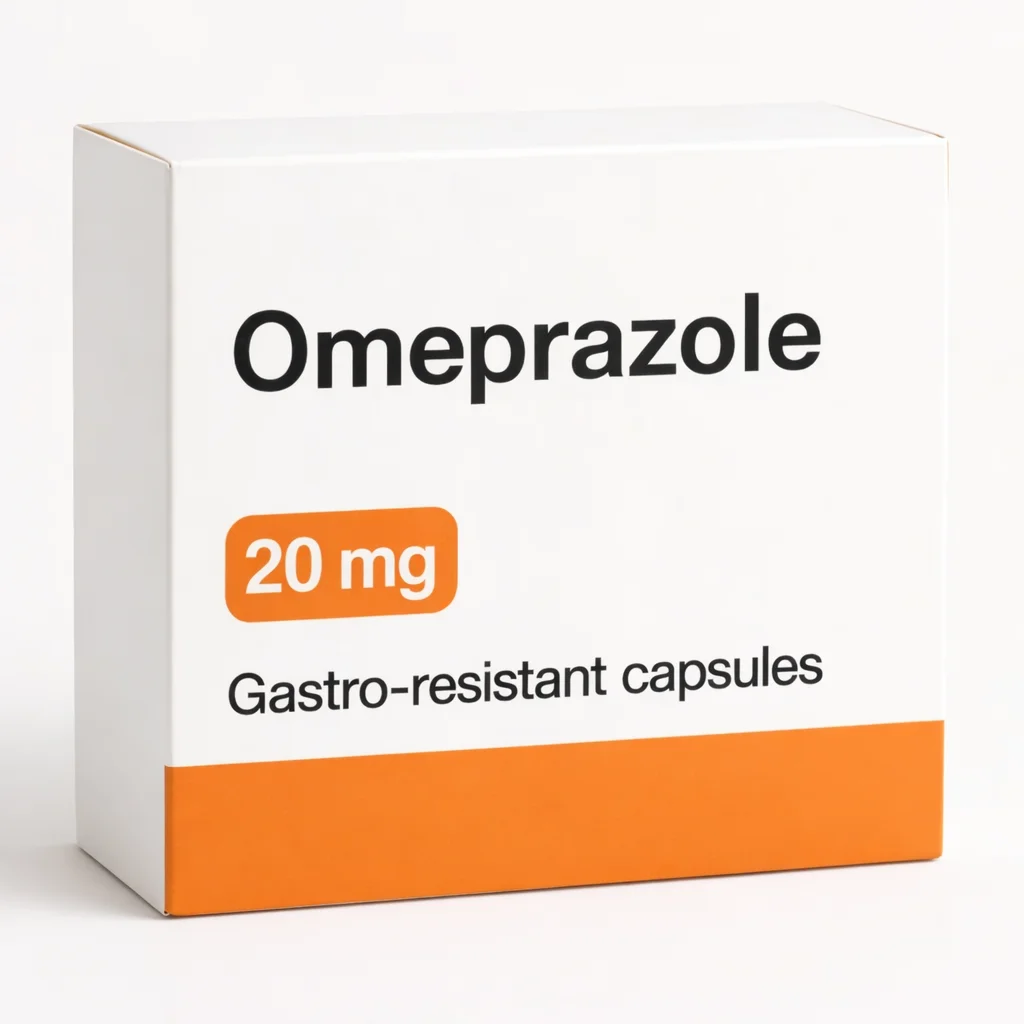
Considerations for Patients Taking Omeprazole
It is important to understand the specific indications and contraindications for omeprazole and the wider PPI family, as the clinical understanding of these medicines continues to evolve (2–5). There is ongoing debate around appropriate indications, long-term safety, and the balance between short-term and long-term treatment strategies (2–5).
Clinical Uniqueness of Proton Pump Inhibitors (PPIs) and Omeprazole
Clinical trials show that PPIs are more effective than histamine-2 receptor antagonists (H2RAs) such as ranitidine, cimetidine, and famotidine (5). They provide stronger acid suppression and a longer duration of action, which can partially extend into nighttime hours.
Another advantage is that PPIs do not develop the rapid loss of effectiveness sometimes seen with H2RAs. With medicines such as ranitidine, cimetidine, or famotidine, reduced response may occur within just 3–5 days of treatment (5).
Gastric and Duodenal Ulcer Disease
Meta-analysis data show that omeprazole and other PPIs are highly effective in treating gastric and duodenal ulcers, with improvement often visible within two weeks of treatment (5). Similar results have been observed when PPIs are used to prevent ulcer recurrence compared with H2RAs (5).
These treatments also significantly reduce ulcer bleeding as well as mortality and morbidity associated with bleeding complications (5).
Eradication of Helicobacter pylori
H. pylori infection is an independent risk factor for gastroduodenal ulcers and ulcer bleeding. Triple or quadruple antibiotic therapy is commonly used to eradicate the infection and reduce overall risk (5).
Evidence suggests that PPI therapy should be combined with antibiotics when treating H. pylori. Without this combination, there may be a risk of developing atrophic gastritis, although evidence in humans remains conflicting (5).
Prevention of NSAID-Induced Gastroduodenal Ulcers
Ulceration and bleeding are potentially serious side effects of non-steroidal anti-inflammatory drugs (NSAIDs) (5).
Omeprazole and other PPIs are significantly more effective than older medicines such as ranitidine, cimetidine, or famotidine (5). Meta-analysis data also suggest that H2RAs are not effective in preventing NSAID-related ulcer complications (5).
Zollinger-Ellison Syndrome
The definitive treatment for this rare condition is usually surgical. However, high doses of omeprazole or other PPIs can effectively control symptoms and suppress excessive stomach acid production while patients await surgery or when surgery is not possible (5).
Erosive Oesophagitis
This condition involves inflammation and tissue erosion in the oesophagus confirmed by endoscopy. Omeprazole and other PPIs have demonstrated faster healing compared with H2RAs (5).
Non-Erosive Reflux Disease (NERD)
Non-erosive reflux disease, also known as endoscopy-negative reflux disease, can be more difficult to treat. Omeprazole and other PPIs generally show lower response rates compared with erosive disease, but they remain more effective than placebo or H2RAs (5).
Functional Dyspepsia
Functional dyspepsia includes conditions such as gastric pain syndrome or post-prandial distress syndrome. Although treatment strategies remain debated, studies suggest that 20 mg of omeprazole may provide greater symptom relief compared with placebo (5).
Clinical Limitations of Omeprazole and PPIs
Despite their effectiveness, PPIs have several limitations that help explain why they are only about 50% effective in non-erosive GERD (gastro-oesophageal reflux disease) (5).
Nocturnal acid breakthrough
PPIs have a relatively short duration of action. Acid production may return overnight, even when patients take PPIs twice daily.
Timing of medication
PPIs should be taken before meals because they bind to the active form of the proton pump, which is stimulated by stomach acid production. Studies suggest that 20–50% of patients take PPIs incorrectly or do not follow the recommended timing.
Non-acid causes of symptoms
In some patients with non-erosive reflux disease, symptoms may be driven by visceral sensitivity rather than excessive acid production. In these cases, PPIs may provide limited relief.
Long-Term Use of Omeprazole and PPIs
Long-term use of PPIs may affect metabolism because of sustained suppression of stomach acid, changes in gut microbiota, and reduced absorption of certain nutrients (13, 8, 7, 6, 5, 3, 2).
Reduced Absorption of Calcium, Magnesium, and Vitamin B12
Long-term treatment may reduce absorption of calcium, magnesium, and vitamin B12, and may also affect bone density. Evidence is mixed, but higher doses and treatment lasting longer than one year have been linked to increased fracture risk, particularly in the hip and wrist.
Magnesium deficiency may also occur, so patients taking PPIs long-term should monitor symptoms and occasionally check magnesium levels.
Increased Risk of Infections
Long-term PPI use has been associated with increased risk of infections such as Salmonella, Campylobacter jejuni, Clostridium difficile, and small intestinal bacterial overgrowth (SIBO).
Reduced stomach acid may allow bacteria from the mouth to pass more easily into the intestines, altering the gut microbiome. Meta-analysis studies have shown a clear increase in Clostridium difficile infections and a higher risk of antibiotic-resistant intestinal infections.
Reduced Antiplatelet Action of Clopidogrel
Omeprazole can affect the metabolism of clopidogrel when both medicines are used in dual antiplatelet therapy during treatment of coronary events.
Clopidogrel requires activation by the CYP2C19 enzyme. Omeprazole both uses and inhibits this enzyme, which may reduce clopidogrel’s effectiveness. Evidence remains mixed.
Some guidelines suggest using rabeprazole instead, as it is metabolised differently and may preserve clopidogrel’s activity.
Collagenous Colitis
Collagenous colitis is a form of microscopic colitis and a recognised cause of chronic diarrhoea. Although diarrhoea is a common side effect of PPIs, rare cases involve increased collagen expression in colon cells.
Possible mechanisms include changes in gut microbiota and mitochondrial dysfunction that disrupt the intestinal barrier.
Gastric Neuroendocrine Tumours
Long-term PPI use can increase levels of the hormone gastrin. Gastrin stimulates enterochromaffin-like (ECL) cells in the stomach, which may increase their growth.
In rare cases, patients with predisposing factors may develop type-1 gastric neuroendocrine tumours. These tumours are typically non-malignant and confined to the stomach lining.
Explore PGx for GastroenterologyWhy Have I Been Prescribed Proton Pump Inhibitors?

Omeprazole and other PPIs are prescribed for a range of acid-related conditions.
Acid-related conditions include ulcers, reflux disease, prevention of NSAID-related ulcers, and Helicobacter pylori eradication (5, 10).
Common reasons for treatment
-
To allow stomach or duodenal ulcers to heal
-
To treat reflux symptoms and oesophageal inflammation
-
To prevent ulcers caused by NSAID medications
-
To reduce stomach acid production in conditions such as Zollinger-Ellison syndrome
-
To support antibiotic treatment for Helicobacter pylori
Omeprazole Doses

How and when to take it
Omeprazole is usually taken once daily, most often for reflux symptoms, ulcer disease, or prevention of NSAID-related ulcers (10).
-
The usual dose is 20–40 mg per day.
-
It should be taken 30–60 minutes before food, usually before breakfast.
-
Taking the medicine before a meal allows the drug to bind to active proton pumps in the stomach and suppress acid production more effectively.
-
In certain conditions such as Helicobacter pylori eradication or Zollinger-Ellison syndrome, omeprazole may be prescribed twice daily.
-
In Zollinger-Ellison syndrome, doses may range from 20 mg up to 120 mg per day, divided into two doses.
Omeprazole Side Effects
Omeprazole and other PPIs can cause both short-term and long-term side effects. Long-term effects mainly relate to prolonged suppression of stomach acid and were discussed earlier in the section on long-term use.
Common Short-Term Side Effects
Short-term side effects during omeprazole treatment may include (1, 3):
-
Headache
-
Diarrhoea
-
Nausea
-
Vomiting
How Your Body and Genes Process Omeprazole
The journey of omeprazole through the body—and how it is metabolised—plays an important role in treatment effectiveness and clinical outcomes (4, 5, 11).
 Absorption
Omeprazole capsules release the medicine in the upper small intestine, with oral bioavailability of approximately 30–40%.
Food significantly reduces absorption, which is why omeprazole should usually be taken 30–60 minutes before breakfast.
 Distribution
Peak blood levels are typically reached between 0.5 and 3.5 hours after taking the medicine.
 Metabolism
Omeprazole is mainly metabolised in the liver by the CYP2C19 enzyme, with a smaller contribution from CYP3A4.
Omeprazole also inhibits CYP2C19, which explains its potential interaction with clopidogrel. Clinical evidence regarding the significance of this interaction remains mixed. CPIC (Clinical Pharmacogenetics Implementation Consortium) guidance provides dosing recommendations based on CYP2C19 genetic status. Although PPIs interact with several CYP enzymes, most interactions are considered clinically insignificant.
Omeprazole itself has a relatively short half-life of 1–2 hours, although its acid-suppressing effects last much longer.
 Elimination
Omeprazole metabolites are primarily eliminated through the kidneys and bile.
Personalising Omeprazole with Pharmacogenetics
Personalised treatment can play an important role in successful omeprazole therapy.
First, the medicine should be taken 30–60 minutes before breakfast when prescribed once daily. This timing ensures the drug is active when proton pumps in the stomach are stimulated by food, allowing it to suppress acid production more effectively.
Second, pharmacogenetic testing for CYP2C19 variants can help predict how quickly an individual metabolises omeprazole. The CYP2C19 enzyme is responsible for most of the drug’s metabolism in the liver.
CPIC (Clinical Pharmacogenetics Implementation Consortium) guidance recommends adjusting doses based on CYP2C19 genetic status. Ultrarapid or rapid metabolisers may require dose increases of up to 100%, while intermediate or poor metabolisers may require dose reductions of around 50% to achieve the desired therapeutic effect.
Interaction with Clopidogrel
CYP2C19 is also required to activate Clopidogrel, a drug commonly used as part of dual antiplatelet therapy after coronary events.
Because Omeprazole both uses and inhibits CYP2C19, taking these medicines together may reduce the activation and effectiveness of clopidogrel. Clinical evidence remains mixed, but the interaction is widely recognised.
For this reason, some clinical guidelines suggest using Rabeprazole instead, as it is metabolised differently and is less likely to interfere with clopidogrel’s antiplatelet activity.
Related Medications:
Other proton pump inhibitors include:
-
Esomeprazole
-
Lansoprazole
-
Pantoprazole
-
Rabeprazole
References
(1) https://www.ncbi.nlm.nih.gov/books/NBK539786/ (2) https://www.jnmjournal.org/journal/view.html?uid=1362&vmd=Full& (3) https://journals.sagepub.com/doi/10.1177/26324636241254611 (4) https://www.frontiersin.org/journals/pharmacology/articles/10.3389/fphar.2025.1507812/full (5) https://www.mdpi.com/1660-4601/18/7/3527 (6) https://pmc.ncbi.nlm.nih.gov/articles/PMC5221858/ (7) https://pmc.ncbi.nlm.nih.gov/articles/PMC5340810/ (8) https://pmc.ncbi.nlm.nih.gov/articles/PMC11504961/ (9) https://pmc.ncbi.nlm.nih.gov/articles/PMC12472414/#B88-pharmaceuticals-18-01372 (10) https://bnf.nice.org.uk/ (11) https://cpicpgx.org/guidelines/cpic-guideline-for-proton-pump-inhibitors-and-cyp2c19/ (12) https://www.mdpi.com/1660-4601/19/22/15359 (13) https://www.mdpi.com/1648-9144/61/9/1569