 Free UK shipping
 Results in under 14 days
 UK lab
10% Off All Tests - March 2026




Introduction to Quetiapine
Quetiapine is classified as an atypical, or second-generation, antipsychotic (1). Unlike first-generation antipsychotics, its primary clinical effects are not driven by strong and sustained blockade of dopamine D2 receptors, which are responsible for Parkinson’s-like movement side effects seen with older agents (35, 36).
In addition to its antipsychotic properties, quetiapine exerts important effects through its active metabolite, norquetiapine. This metabolite increases dopamine availability in key brain regions such as the limbic system and prefrontal cortex, contributing to improvements in negative symptoms of schizophrenia and providing additional antidepressant activity (38).
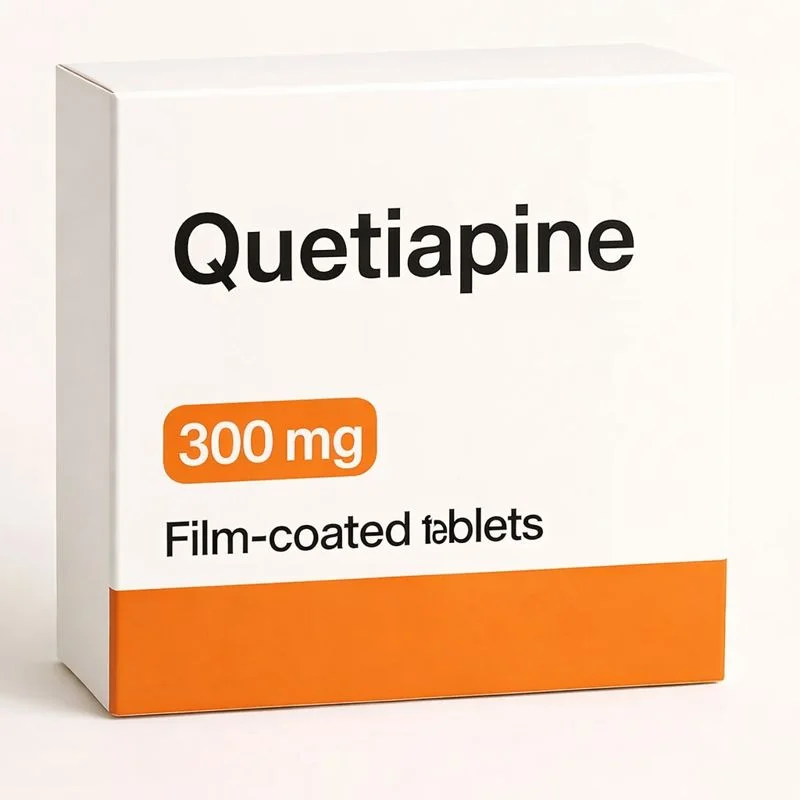
Considerations for Patients Taking Quetiapine
Quetiapine has a dose-dependent pharmacological profile. At lower doses, dopamine D2 receptor binding is brief and easily reversible, which explains why quetiapine produces very low rates of extrapyramidal side effects and prolactin elevation, even when used for sedation or insomnia (38).
Movement and Prolactin Effects
Quetiapine is among the least likely atypical antipsychotics to cause Parkinson’s-like side effects, including dystonia or akathisia (35, 36, 38). It also has minimal impact on prolactin levels, reducing the risk of sexual dysfunction, infertility, and prolactin-associated breast effects in both men and women (38).
Sedation and Cognitive Effects
Compared with first-generation antipsychotics, quetiapine is associated with a lower incidence of subjective negative experiences such as emotional blunting, anxiety, irritability, reduced motivation, and distress. These symptoms are a major cause of poor adherence with older antipsychotic medicines (35, 36).
Metabolic Effects
Quetiapine is unusual among antipsychotics in that it has documented misuse potential. Its calming and anxiolytic properties have led to non-medical use to enhance or offset the effects of other substances or to manage withdrawal symptoms (39). Increasing evidence suggests that repeated misuse may lead to psychological dependence, and overdose can be associated with significant toxicity (39).
Older Adults
Older adults are particularly sensitive to quetiapine’s side-effect profile (37, 38). Postural hypotension can lead to dizziness and falls, sometimes resulting in fractures. Cognitive effects such as confusion or memory impairment may be more pronounced and harder to distinguish from age-related cognitive decline. Metabolic effects, including weight gain, hyperglycaemia, and dyslipidaemia, are also clinically important in this group because of baseline cardiovascular risk.
Misuse and Toxicity
In cases of overdose or misuse, quetiapine can cause life-threatening toxicity, including severe hypotension, cardiac arrhythmias, marked sedation, and Parkinson’s-like symptoms (39).
Explore PGX for Mental HealthWhy Have I Been Prescribed Quetiapine?

An anti-antipsychotic with several uses
In the UK, quetiapine is licensed for the treatment of schizophrenia, bipolar disorder, and as an adjunctive treatment for major depressive disorder (16). Clinicians may choose quetiapine because it provides antipsychotic efficacy while also offering mood-stabilising and antidepressant benefits, particularly in patients who have not tolerated other agents well.
The choice is usually based on symptom profile, previous treatment response, side-effect vulnerability, and individual clinical circumstances.
Quetiapine

How and when to take it
Quetiapine dosing is highly individual and depends on the condition being treated, the formulation used, and how a person tolerates the medicine. Treatment usually starts at a low dose and is increased gradually to reduce side effects such as sedation, dizziness, or low blood pressure. Lower doses are often used for sleep or anxiety-related symptoms, while higher doses are required for bipolar disorder or schizophrenia. Immediate-release and prolonged-release forms are dosed differently, and switching between them should only be done under clinical guidance. Ongoing review is important, as dose adjustments may be needed over time to balance symptom control with side effects.
Quetiapine Side Effects
Although quetiapine has a more favourable neurological side-effect profile than first-generation antipsychotics, it is associated with metabolic and sedative effects (35,37).
Common side effects include
Weight gain, increases in blood glucose and cholesterol, dizziness, sedation, and cognitive slowing. Older adults are particularly vulnerable to balance problems, confusion, and orthostatic hypotension.
Explore PGX for Mental HealthHow Your Body and Genes Process Quetiapine
Quetiapine’s clinical effects are strongly influenced by its metabolism and by the activity of its pharmacologically active metabolite, norquetiapine (38). Differences between immediate-release and extended-release formulations further affect how the drug behaves in the body (40, 41).
 Absorption
Extended-release quetiapine shows increased bioavailability and higher peak concentrations when taken with heavy meals, whereas immediate-release formulations are not significantly affected by food intake. For this reason, extended-release formulations are generally advised to be taken away from large meals (40, 41).
 Metabolism
Approximately 89 percent of quetiapine is metabolised via the CYP3A4 pathway. The drug is converted into multiple metabolites, of which norquetiapine is the most clinically important (38). Norquetiapine is further metabolised by CYP2D6.
Reduced CYP2D6 activity can result in higher norquetiapine levels. Because norquetiapine strongly blocks muscarinic, histamine, and adrenergic receptors, elevated levels may increase sedation, weight gain, cognitive impairment, dizziness, and balance problems, particularly in older or vulnerable patients (38).
Personalising Quetiapine with Pharmacogenetics
There are currently no formal CPIC guidelines for quetiapine dosing based on genetic profile. This reflects limited evidence rather than absence of metabolic relevance. Variability in CYP3A4 and CYP2D6 activity, combined with age, formulation, diet, and drug interactions, contributes to the wide range of individual responses observed in clinical practice.
What This Means for You
Older adults should be especially vigilant for dizziness, balance problems, and cognitive changes. Adequate hydration, slow position changes, and regular review of dose and formulation are important. Abrupt dietary changes, particularly with extended-release formulations, should be avoided. If quetiapine becomes less effective over time or increasingly relied upon for calming effects, this should be discussed with a clinician.
Quetiapine is widely used and effective when carefully monitored. Open communication with healthcare professionals is essential to maximise benefit and minimise risk.
Related Medications:
Other antipsychotic medicines include:
- Clozapine
- Aripiprazole
- Olanzapine
- Haloperidol
- Perphenazine
- Thioridazine
- Zuclopentixol
References
(1) https://www.ncbi.nlm.nih.gov/books/NBK535399/ (2) https://www.mdpi.com/2226-4787/12/3/92 (3) https://www.mdpi.com/2075-1729/15/6/830 (4) https://journals.plos.org/plosone/article?id=10.1371/journal.pone.0319037 (5) https://pmc.ncbi.nlm.nih.gov/articles/PMC7947876/ (6) https://www.nature.com/articles/s41598-020-78474-0 (7) https://www.sciencedirect.com/science/article/pii/S0167527324001189 (8) https://www.researchgate.net/publication/369533176_Second_to_none_rationale_timing_and_clinical_management_of_clozapine_use_in_schizophrenia (9) https://www.mdpi.com/2227-9059/12/10/2294 (10) https://link.springer.com/article/10.1007/s40263-025-01236-x (11) https://pmc.ncbi.nlm.nih.gov/articles/PMC6449846/ (12) https://pmc.ncbi.nlm.nih.gov/articles/PMC8883353/ (13) https://www.mdpi.com/1422-0067/24/2/1243 (14) https://pmc.ncbi.nlm.nih.gov/articles/PMC8301879/ (15) https://bnf.nice.org.uk/ (16) https://www.nature.com/articles/s41380-023-02026-x (17) https://www.rightdecisions.scot.nhs.uk/tam-treatments-and-medicines-nhs-highland/adult-therapeutic-guidelines/mental-health/clozapine-initiation-and-re-titration-specialist-mental-health-guidelines/ (18) https://pmc.ncbi.nlm.nih.gov/articles/PMC7766585/ (19) https://pmc.ncbi.nlm.nih.gov/articles/PMC8061735/ (20) https://pmc.ncbi.nlm.nih.gov/articles/PMC4915939/ (21) https://www.sciencedirect.com/science/article/pii/S0378427425015802 (22) https://www.ncbi.nlm.nih.gov/books/NBK547739/ (23) https://pmc.ncbi.nlm.nih.gov/articles/PMC9889418/ (24) https://pmc.ncbi.nlm.nih.gov/articles/PMC5725548/ (25) https://www.nature.com/articles/tp201794 (26) https://link.springer.com/article/10.1007/s40263-015-0278-3 (27) https://www.nature.com/articles/s41598-022-16130-5 (28) https://pmc.ncbi.nlm.nih.gov/articles/PMC6127750/ (29) https://www.ncbi.nlm.nih.gov/books/NBK534115/ (30) https://www.nature.com/articles/s41537-021-00158-z (31) https://www.sciencedirect.com/science/article/pii/S0278584624002021 (32) https://cpicpgx.org/wp-content/uploads/2020/12/2020-Dec-CPIC-Antipsychotic-PGx_Final.pdf (33) https://www.ncbi.nlm.nih.gov/books/NBK459145/ (34) https://pmc.ncbi.nlm.nih.gov/articles/PMC4316978/ (35) https://www.ccjm.org/content/88/5/286 (36) https://pmc.ncbi.nlm.nih.gov/articles/PMC3770982/ (37) https://pmc.ncbi.nlm.nih.gov/articles/PMC5348850/ (38) https://pmc.ncbi.nlm.nih.gov/articles/PMC12272296/ (39) https://pmc.ncbi.nlm.nih.gov/articles/PMC9889418/ (40) https://pmc.ncbi.nlm.nih.gov/articles/PMC5725548/ (41) https://www.mdpi.com/2673-9879/2/3/18